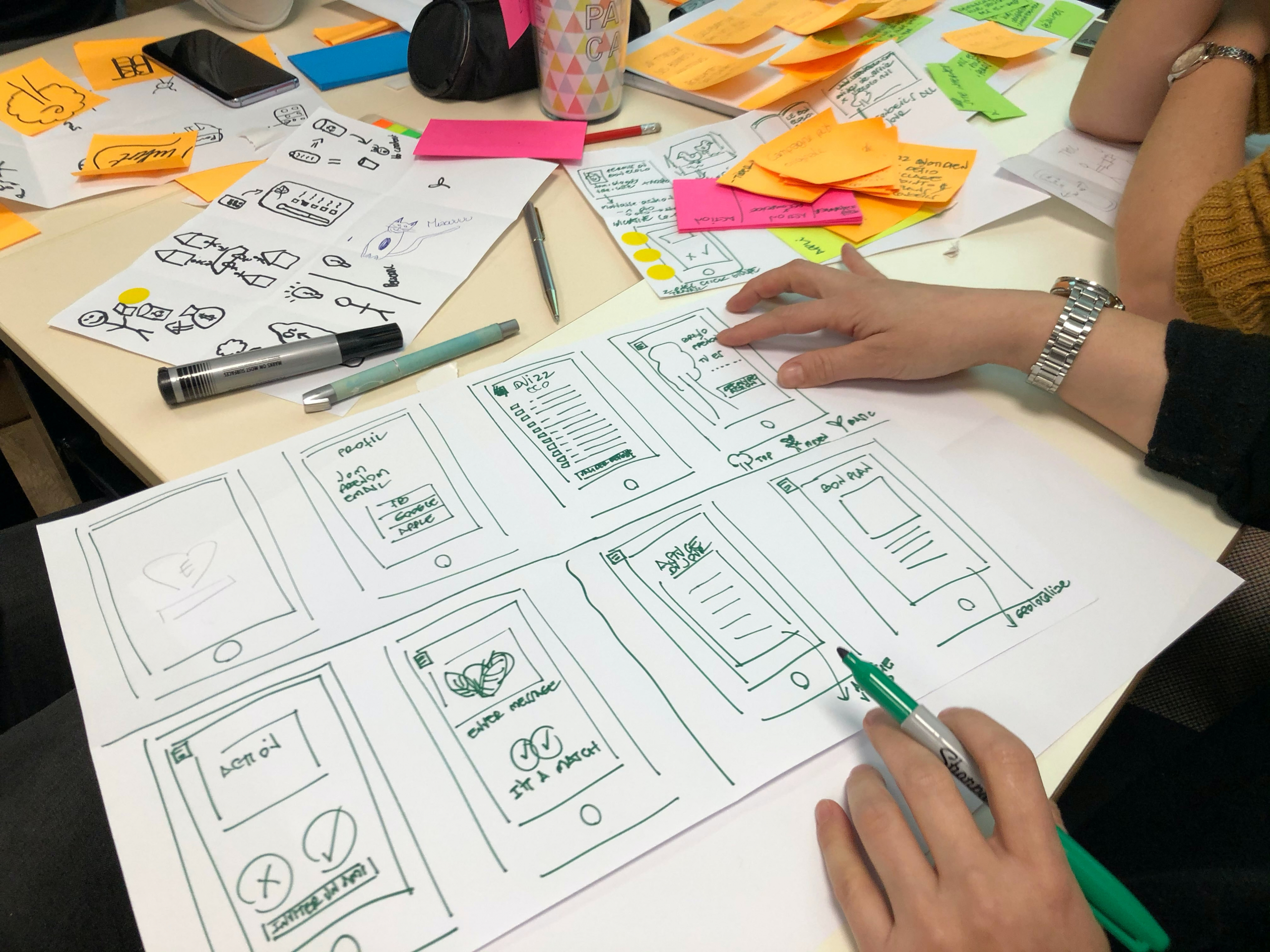
StartHub Africa has different programs including the academy and catalyzer programs. In both of these programs, startups are taught basic business operations. One common feature in all these programs is design thinking. At StartHub, we emphasize it a lot for all entrepreneurs.
But StartHub isn’t the only organisation that is big on design thinking. It is a major feature of global giants like Apple, Google, Samsung and General Electric among others. It is also being taught at the best universities in the world like Stanford, Harvard and Massachusetts Institute of Technology (MIT).
What is design thinking?
According to Interaction Design, design thinking is an iterative process in which we seek to understand the user, challenge assumptions, and redefine problems in an attempt to identify alternative strategies and solutions that might not be instantly apparent with our initial level of understanding.
Essentially, design thinking is all about the journey from having an idea in your mind as an entrepreneur to building a market fit product. When every entrepreneur comes up with this big idea, they rely on assumptions of the market from who will be their customers, who are willing to pay for the product and how creative is the solution.
The design thinking process helps the entrepreneur to throw away these assumptions and build a product based on actual feedback and insights from potential users. The Hasso-Platner Institute of Design at Stanford, one of the schools at the forefront of applying and teaching design thinking, came up with 5 stages of the process. Let’s explore them below.
Stage 1: Empathize
The entrepreneur has to empathize with their users. This is basically putting yourself in their shoes and trying to reason from their perspective. This is the first stage of design thinking. Once an entrepreneur is able to empathize with their users, they can move on to the next stage.
Stage 2: Define your users’ needs.
The users, needs are defined by interviewing potential users. Through interviews, one can know what their problems actually are. This stage also helps the entrepreneur to pinpoint what his target group of customers is going to be based on insights received. It is important to compare your findings here with your assumptions.
Stage 3: Ideate.
At this stage, the entrepreneur should have moved on from the assumptions they had and actually have an idea of what the users truly want. This stage is for the entrepreneur to come up with a solution to the problem that he identified in stage 2, a solution that can cater for the users’ needs.

Stage 4: Prototype.
It is now time to build something the users can use. There are various ways to build a prototype. You can use tools like Canva, inVision, SAP and Marvel among others. You should build something that potential users can test and get a view of how the solution you came up with will work.
Stage 5: Test.
Test your prototype with various users. Takedown the feedback they give you and use it to refine your prototype even further until you have one that they can use. When you are confident of your prototype, then you can move on to development.
Why is Design Thinking important?
Startups are known for innovation and invention. Most of them are building solutions that have never been tested or done before. This makes it a virgin field and hence, assumptions are what fill in for facts. It is on the entrepreneur to replace those assumptions with facts before developing their startup.
Design thinking helps entrepreneurs to minimize losses on their investment. One of the biggest killers of startups is building something no one wants or something that no one can use. This is why it is important for any entrepreneur to go through this process. Design thinking gives the entrepreneur a better chance of building a successful startup.
This is why we have made design thinking a very important tool in all our programs, here at StartHub.