
From Learning to Earning: i-UPSHIFT Celebrates the Youth Turning Skills into Opportunity
For young people, acquiring skills is only one part of preparing for the world of work and entrepreneurship. Turning those skills into real opportunities requires practical experience, mentorship, networks, and spaces where young people can test their ideas, receive feedback, and build confidence.
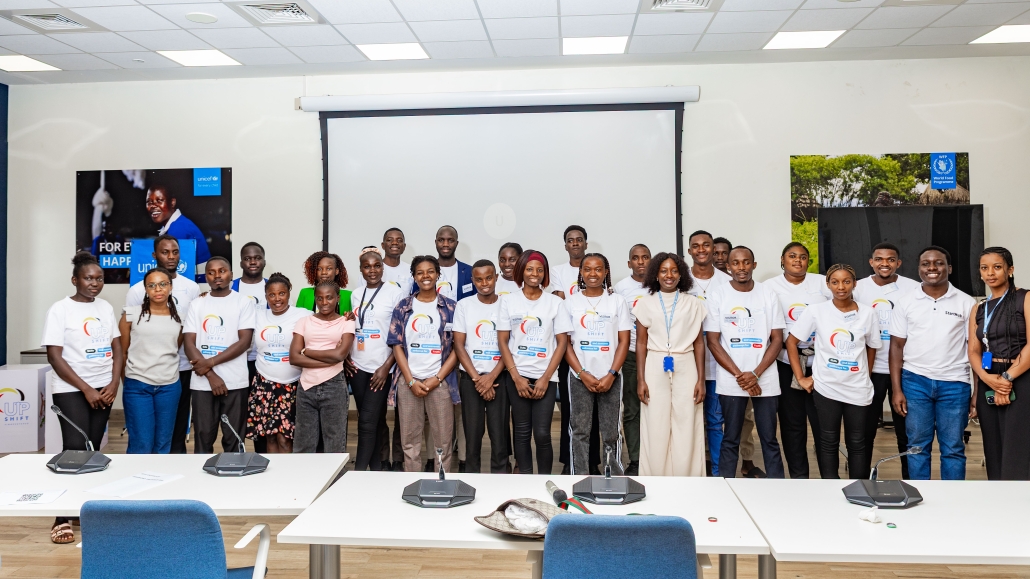
On 20 August 2026, the i-UPSHIFT 2026 program brought together young innovators, entrepreneurs, interns, partners and stakeholders at the UNICEF offices in Mbuya, Kampala, for the Learning2Earning Closing Event.
Implemented by StartHub Africa in close collaboration with UNICEF Uganda, the Ministry of Gender, Labour and Social Development, and private sector partners. The event marked the close of i-UPSHIFT covering new participants and actively re-engaging alumni across Kampala and Isingiro.
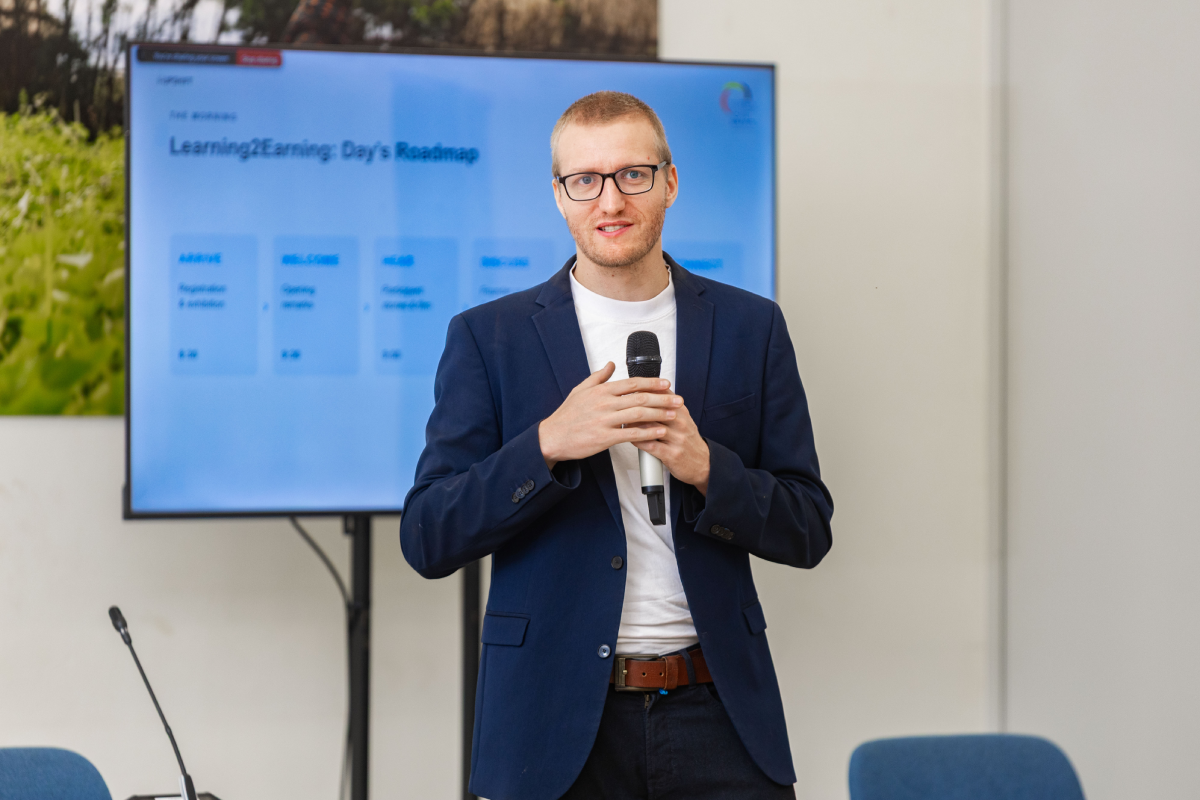
Matthias Möbius, Co-Founder of StartHub Africa, hosting the event
From Skills to Real-World Experience
The event brought together participants under three tracks; New Cycle, and two tracks covering alumni, alongside representatives from government, development organizations, private sector companies, trainers and mentors.
It centered on participant testimonials, panel discussions, interactive sessions, and product exhibitions. These conversations highlighted how young people had applied what they learned to build businesses, enter the workplace, and respond to real customer needs.
A recurring theme throughout the day was learning by doing. Participants repeatedly pointed to the program’s 50K challenge, which required teams to sell something rather than simply plan to sell. For many, this became a turning point in understanding customers, testing ideas, and working as a team.
What Participants Took Away
For participants in the Alumni Learning Track, the transition into the workplace provided another opportunity to put skills into practice.
Andrew Muggaga, who completed an internship at Menterprise Uganda Ltd, was subsequently retrained and offered a full-time contract with the company. Reflecting on how the experience changed his approach to feedback, he said:
“I now design according to what the client values rather than my own preference.”
Andrew’s journey reflects one of the broader lessons from the program: practical exposure can change not only what young people know, but also how they approach their work and respond to the needs of their employers and clients.

Andrew Muggaga, sharing his experience during the event
Several participants were successfully placed as interns and four subsequently retained by their host companies. Participants highlighted communication, adaptability, customer engagement, and the ability to receive and act on feedback as some of the most valuable skills gained.
Building Businesses That Respond to Real Needs
The program also supported young people building and growing businesses.
514 young people participated in the New Cycle, while 94 alumni were re-engaged through the Learning and Acceleration tracks. Around 125 teams were formed, with 24 teams progressing through pitching to six weeks of post-pitch support focused on unit economics. Women represented 58% of participation, while refugees accounted for approximately 32%.
The exhibition gave participants an opportunity to pitch their products directly to stakeholders and receive practical feedback on pricing, sourcing, sales and market access.
Strengthening the Path from Learning to Earning
The event also created space for partners to reflect on what is needed to make the transition sustainable.
Melissa Kyeyune from the International Labour Organization (ILO) highlighted that the journey from learning to earning also comes with new responsibilities. As young people transition from being trained participants to becoming employers, she noted, they need to understand what it means to create decent and sustainable work for others.
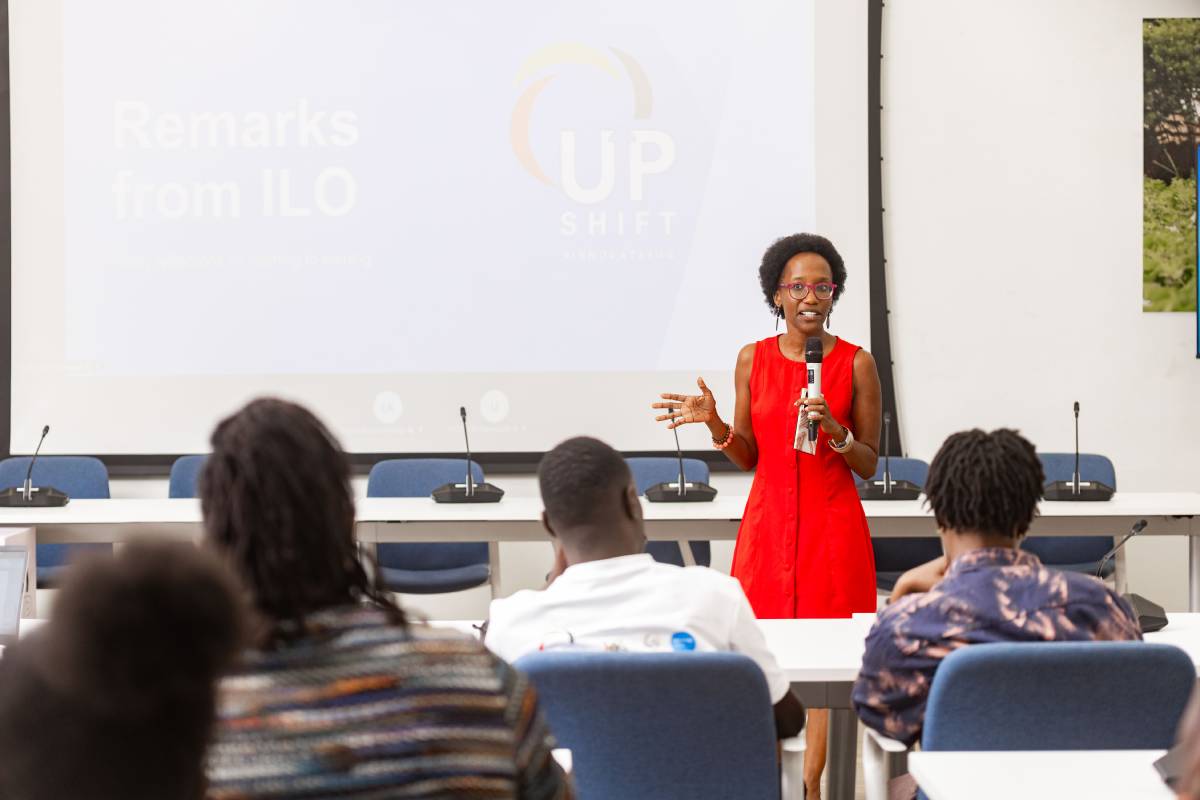 Melissa Kyeyune delivering remarks on behalf of the International Labour Organization (ILO).
Beyond the Program
The Learning to Earning event demonstrated that the impact of i-UPSHIFT extends beyond the training room. Participants are testing products, engaging customers, entering workplaces, and building businesses.
The journey does not end with the closing event. Instead, it marks the point where learning continues through practice, feedback, customers, workplaces, and the realities of building a livelihood.
As one of the key lessons from the event captured, the distance between learning and earning is closed through practice rather than instruction.