Baby Kit’s Growth Journey with WeWork
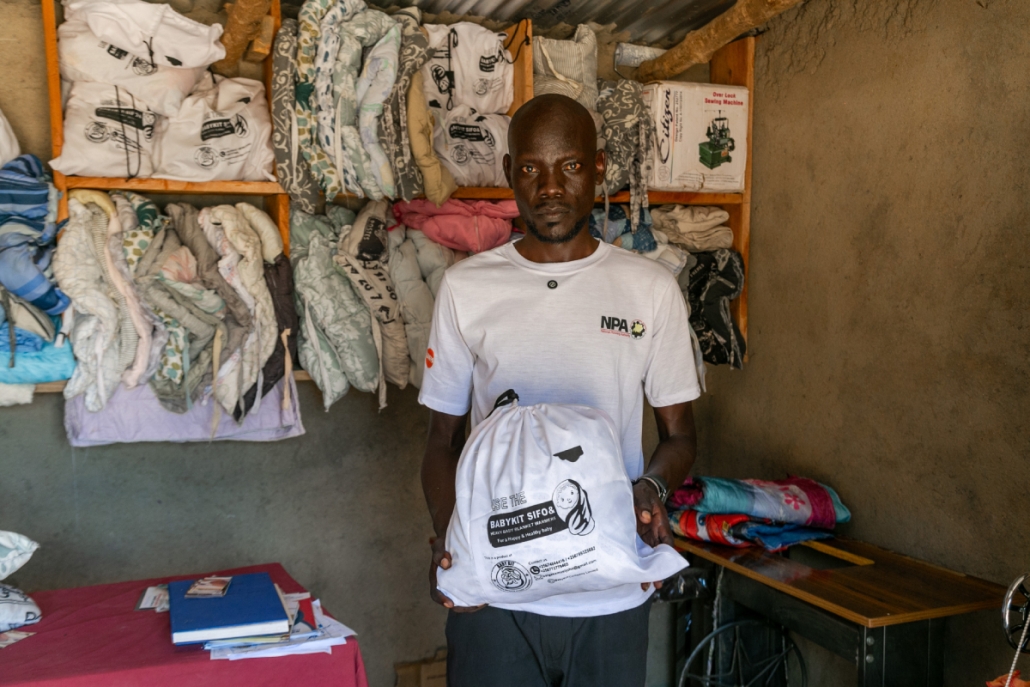
For Baiga Samuel John, co-founder of Baby Kit, building a business in Bidibidi Refugee Settlement has been a journey of persistence, learning and growth. What started as a small enterprise with limited production capacity is gradually becoming a growing business, creating employment opportunities while addressing a need among expecting and lactating mothers.
A refugee from South Sudan, Samuel is based in Zone 2, Village 5 of Bidibidi Refugee Settlement, where Baby Kit operates. The enterprise produces baby warmers designed to help expecting and lactating mothers keep their newborns, particularly babies aged zero to three months, warm and protected from cold conditions.
Like many early-stage businesses, Baby Kit faced several challenges in its initial stages. Limited access to production equipment affected its ability to manufacture products at scale. The business also struggled with limited technical and business management skills, as well as inadequate market connections to reach more customers beyond its immediate community.
At the time, Baby Kit produced approximately 40 baby warmers a month, making it difficult to meet growing demand and expand its customer base.
Building capacity for business growth
Things began to change when Baby Kit joined the WeWork – Green and Decent Jobs for Youth project, implemented by StartHub Africa in collaboration with Enabel, the Belgian Agency for International Cooperation, under the Global Gateway strategy, with funding from the European Union and Belgium.
Through the project, the business received production equipment and participated in a series of business development trainings, mentorship sessions and coaching designed to strengthen its operations and support sustainable growth.
For Samuel, one of the most valuable aspects of the project was the practical knowledge gained during the bootcamp and subsequent mentorship sessions.
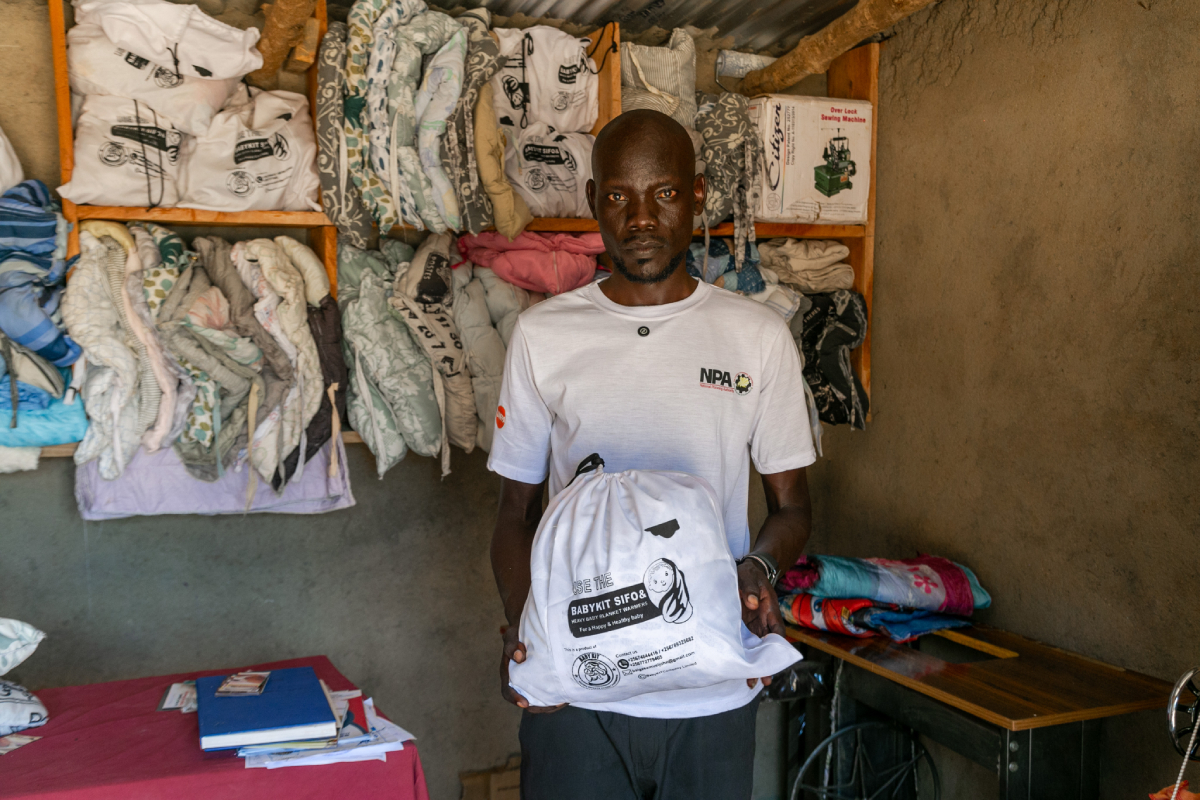
Meet Samuel John, co-founder of Baby kit
“We were lacking knowledge in financial management, but when we joined the WeWork project, we were taken through physical and online trainings in financial management, cash flow and online record keeping using Zoho. All this has really impacted BabyKit,” he explains.
The training helped the team better understand how to manage business finances, monitor cash flow, maintain records and make more informed business decisions. Through mentorship, Baby Kit also received guidance on developing a business growth roadmap, identifying potential markets and exploring opportunities to increase sales.
The additional production equipment has also made a significant difference. According to Samuel, Baby Kit’s production capacity has grown from approximately 40 products a month to as many as 250 products a week, giving the business greater capacity to respond to market demand and serve more customers.
Growing the business and creating jobs
Beyond increased production, the support has contributed to the growth of Baby Kit’s team.
Before joining WeWork, the enterprise had seven team members. It has since expanded to 20, bringing on board 13 additional people as its operations grow.
For a business operating within a refugee settlement, this growth represents more than increased production. It also creates opportunities for people in the surrounding community to participate in economic activities and access employment.
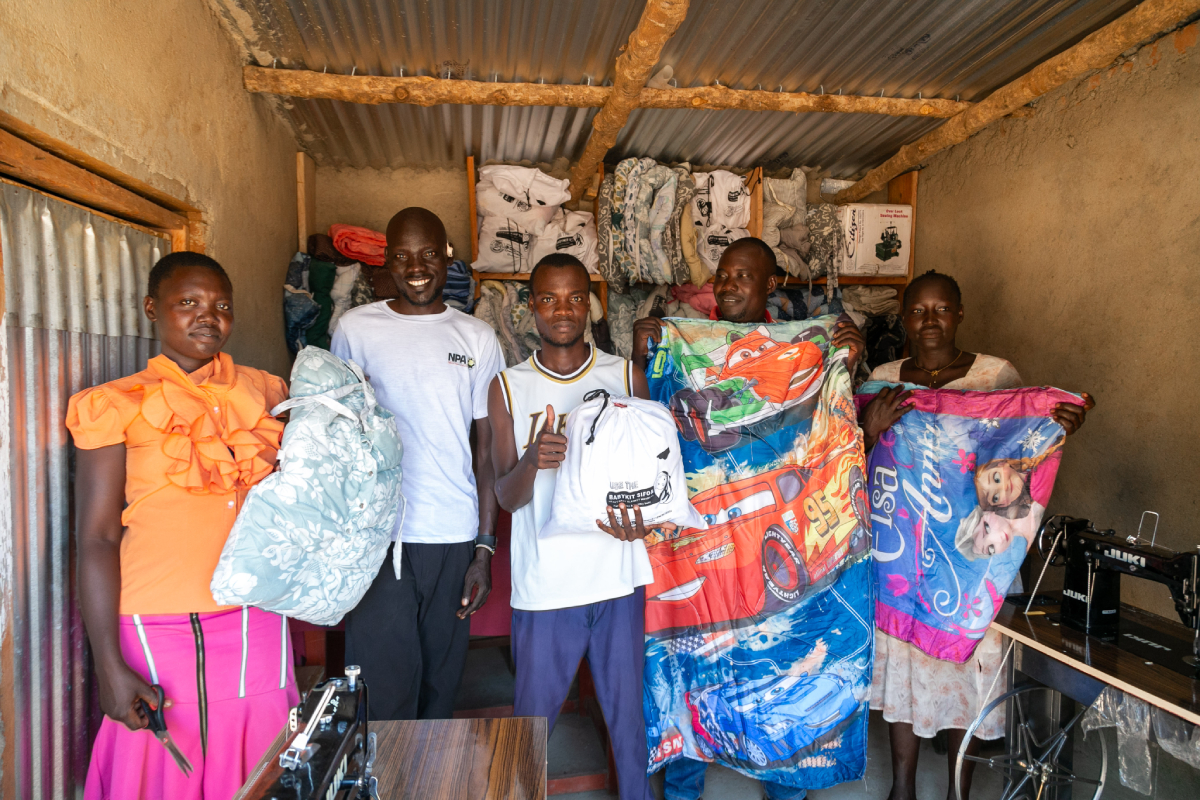
Samuel John and his team at the shop
Samuel attributes this progress to the combination of equipment, business training and continued mentorship provided through the project.
“The mentorship project, the different trainings and the support we received have really given us the knowledge to move into different markets. These are some of the things that have impacted BabyKit so much,” he says.
Looking ahead
With improved production capacity, a larger team and stronger business management skills, Baby Kit is looking to build on the progress made through the WeWork project.
Samuel hopes to further increase production and sales while reaching more customers through expanded market connections.
For him, the experience has also gone beyond the growth of the business. The knowledge and mentorship received have helped him think more strategically about what he wants to achieve as an entrepreneur and the future he envisions for Baby Kit.
He is grateful to the WeWork team for the support extended to the enterprise, noting that the project has provided both the practical resources and the knowledge needed to take the business forward.
Baby Kit’s journey in Biddi-biddi is one example of how targeted business support can help early-stage enterprises overcome growth barriers and build a stronger foundation for the future.