
On the 24th of November 2022, StartHub Africa held its National Inter-University Pitch contest for business-minded students during the Uganda Innovation Week at Mestil Hotel. This is the ultimate stage of the StartHub Africa Launchpad program which is a semester-long program designed to give students practical entrepreneurship skills in market research, business modelling, and sales & marketing.

At this event, StartHub celebrates all the innovations developed through its programs during the year. The program accepts and welcomes university students with or without a business idea. Every semester, we receive hundreds of applications at each of our partner universities for the program. Many students come up with their ideas through StartHub’s ideathons and bootcamps during the year, and then launch the business and start to make money. These students compete at their respective universities and the winner for each semester gets a direct pass into the National finals.
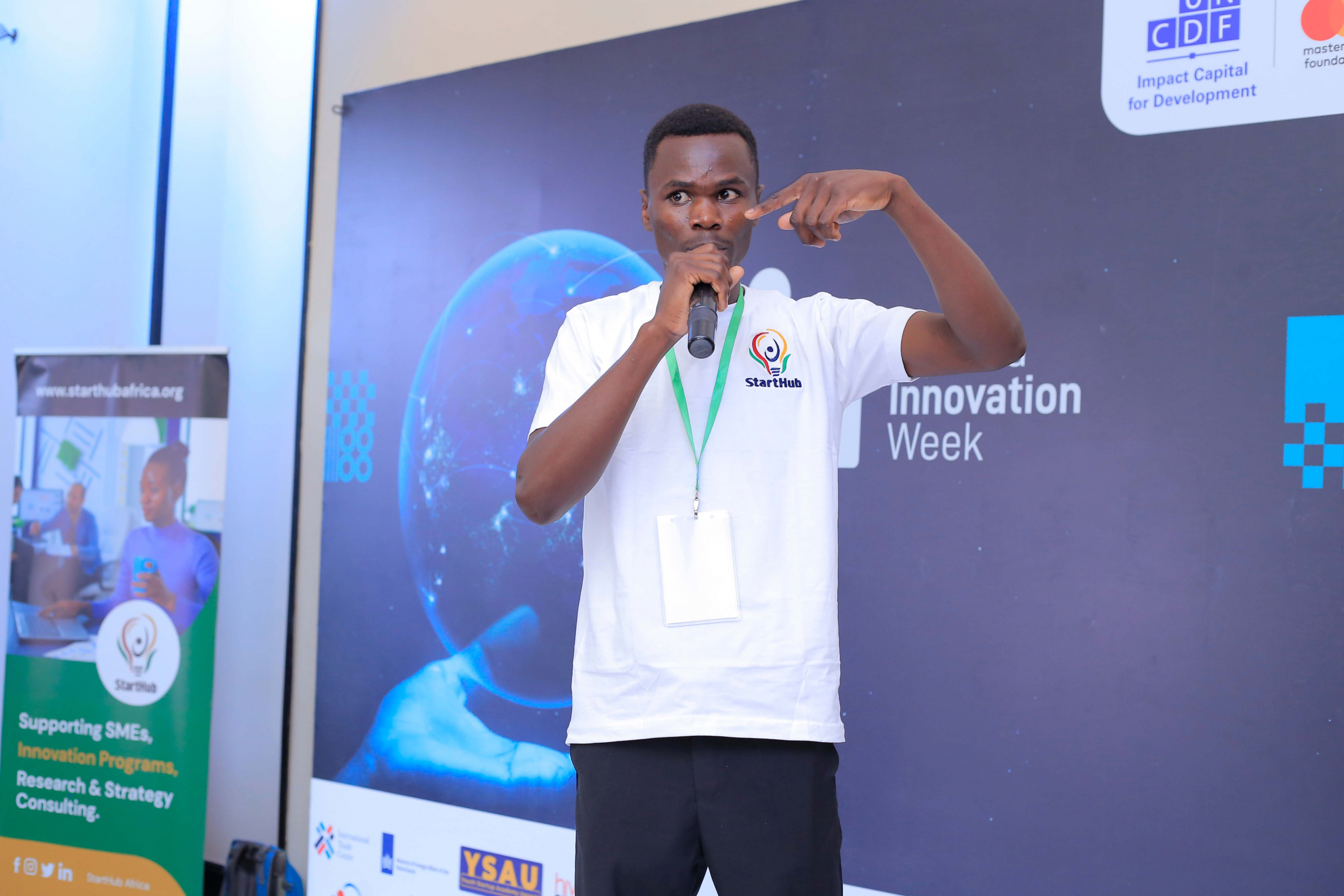
Figure 2:  One of the finalists pitching during the event (NedTech Uganda)

This year’s contest attracted 12 finalists from 6 partner universities namely, Kyambogo University, Makerere University, Busitema University, Mbarara University of Science and Technology, Gulu University, and Muni University.  Most of these student startups were less than a year old and were started during our Launchpad program.

The Battle for a share of a share of the 10 million shillings grant.
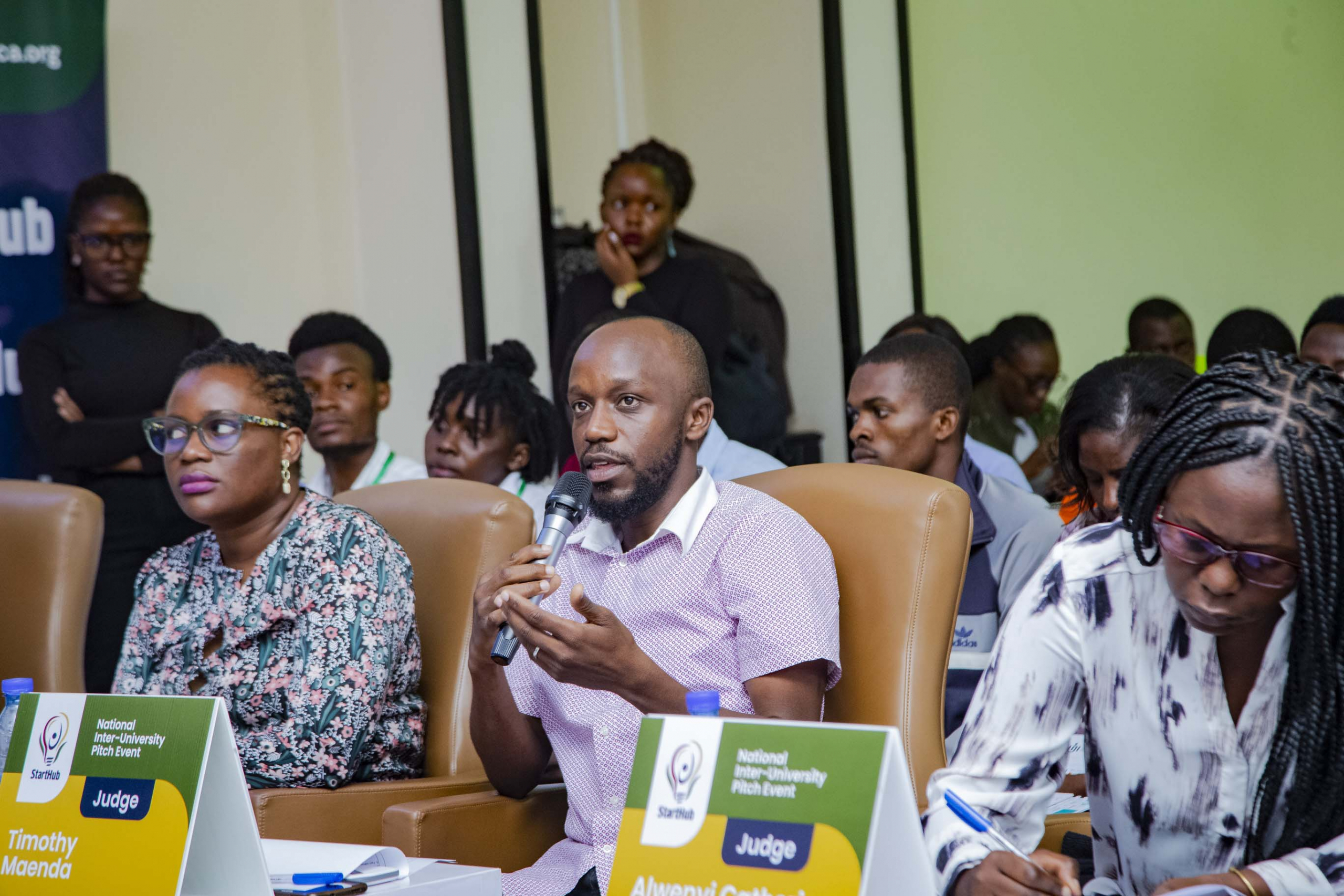
The 12 finalists faced off in front of a jury composed of business experts and experienced individuals in the innovation space. The participants had 5 minutes to pitch their ideas and also had 5 minutes to answer questions from the jury.

The jury offered valuable feedback and expert advice to these young entrepreneurs.

By the end of the day, the jury members selected 6 teams as favourites for a share of the 10 million shillings grant as follows.

1. NetTech Uganda (Busitema)- Won 2.5 Million Uganda Shillings:
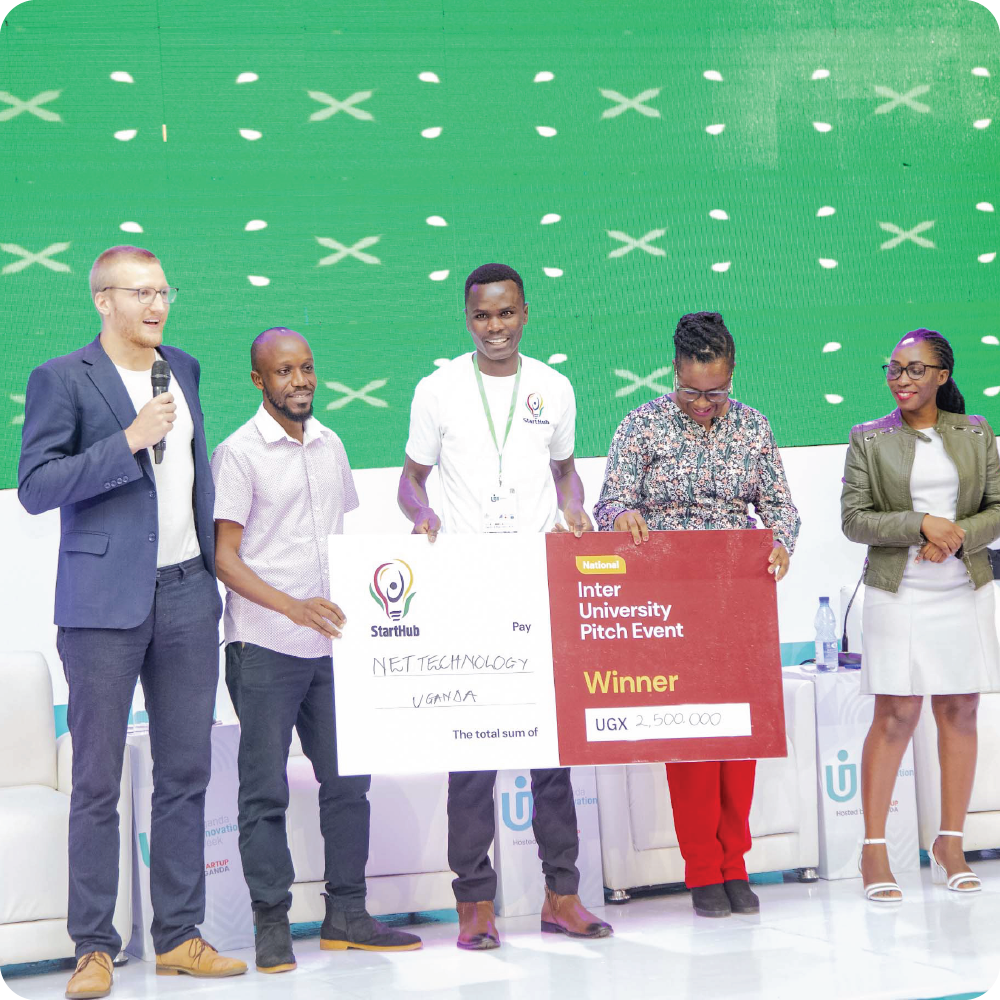
Problem: Temperatures and anomalies in gridline power cables in electricity infrastructures are manually monitored and at times, the cost of monitoring is always high. Besides this, the breakdown of such infrastructure brings a standstill to operations in the affected areas.

Solution: NedTech offers a networked temperature sensor that is installable on grids and has a sensor that is capable of reading extreme temperatures, with a GPS that enhances the tracing of vulnerable grids and provides timely data to the control station which eliminates inconsistencies in the monitoring process.


2. Kanga Care (MUST) – Won 2 Million Uganda Shillings.
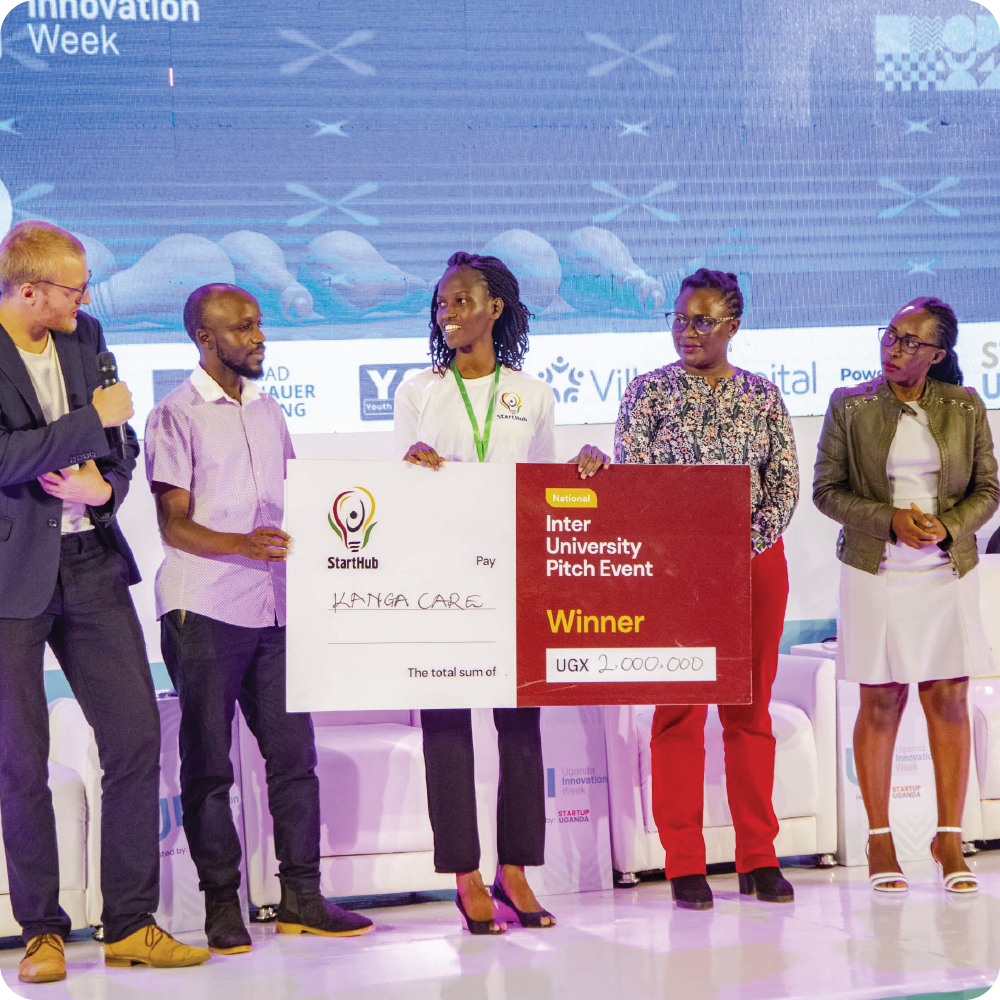
Problem: Prematurity is the leading cause of death amongst babies in the world and 60% of these deaths occur in Africa Uganda ranks 28th.

Solution: Kanga Care offers a baby warmer that is locally knitted using Yarn and fitted with vital reading sensors and a mini oxygen cylinder and is also designed to regulate the temperature of preterm infants in the absence of incubators. The bag provides maximum warmth to babies and comes at an affordable price.  This is in an attempt to address the issue of high infant mortality rates in the developing world by replacing expensive traditional infant incubators.


3. Agro Verm. (Makerere University)-Won 1.5 Million Uganda Shillings.
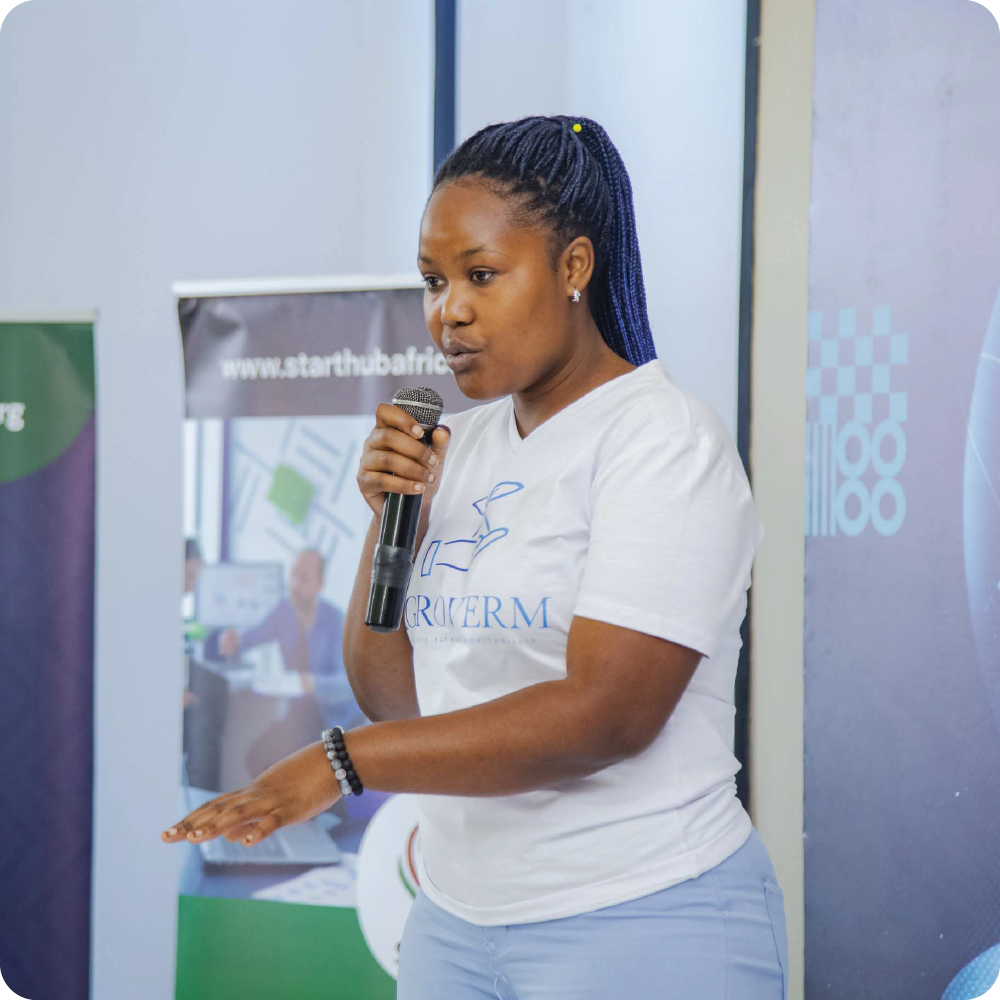
Problem: Most fertilizers in the Ugandan market are inorganic and expensive. In the end, farmers spend a lot of money but the crop yield is always low and of poor quality. This results burden is shifted to the consumers by charging a high price for the few crop products on the market.

Solution: Agro-verm manufactures organic fertilizers from recycled wastes and offers this to farmers at an affordable price.


4. Mari Medicinal. (Makerere University) – Won 1.5 Million Uganda Shillings.
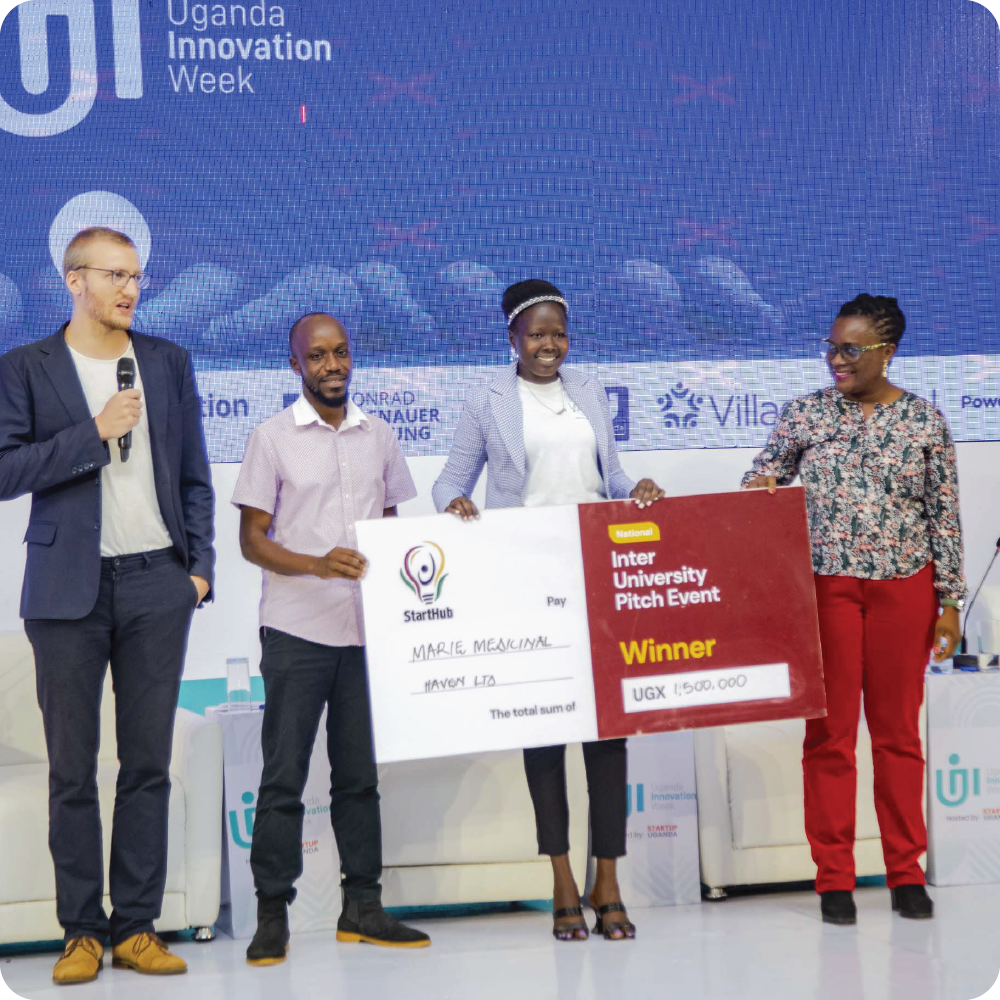
Problem: 85% Of People, aged 11-30 are affected by ACNE but most Skin care products don’t actually solve it and if they do, they are quite expensive.

Solution: Marie Medicinal offers skin soap that is organic and locally made with candlenut extract. The soap is affordable, durable, effective, and made by a refugee community in Gulu.


5. Smart Clean Energy. (Gulu University) – Won 1.5 Million Uganda Shillings.
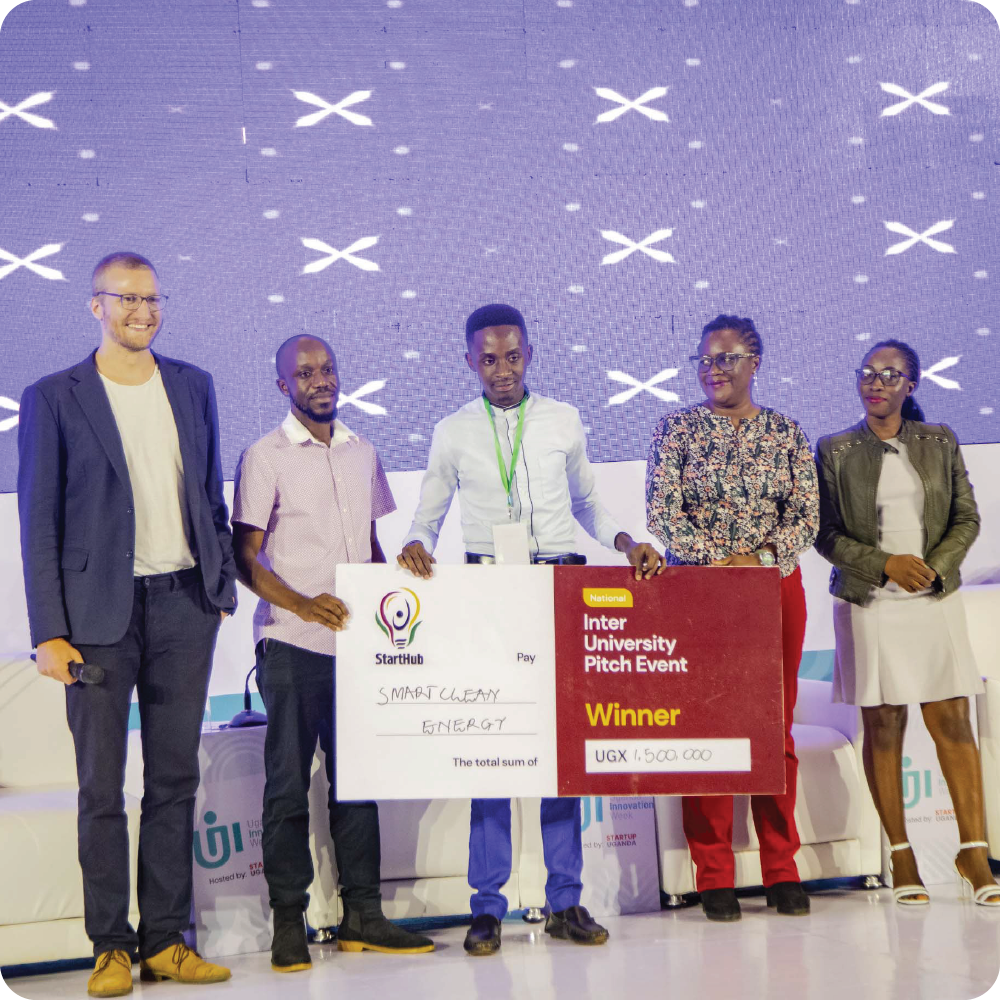
Problem: Most power users in Uganda often complain about the instability of power, uneven at times, pollution when it comes to gasoline generators, and the high costs of fuel.

Solution:    Smart and clean energy offers a smart tech electronic 240vac generator that is cheap, portable, and compatible with a number of devices. The uniqueness of the product comes with compatibility with the off-grid and on-grid customers. It can also be remotely controlled and serves as both a UPS (Uninterruptable Power Supply) and as a solar converter.


6. Mindspace (Makerere University) – Won 1 Million Uganda Shillings.
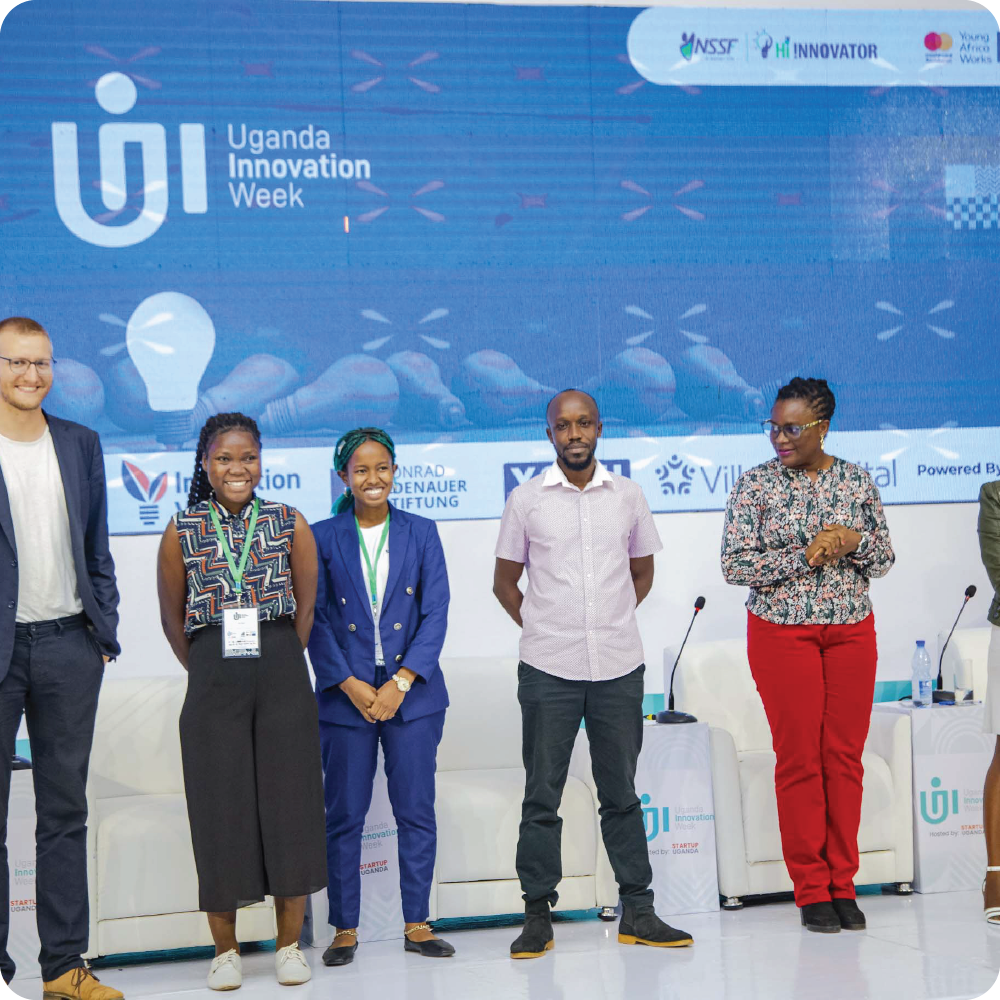
Problem: Over 14 million Ugandan have mental health issues and the treatment gap is 85%. This causes Limited access to mental health services and long waiting times.

Solution: A digital platform that allows users to access mental health support and information at the touch of a button. Mindspace lets its user talk to licensed therapists, and group support through community channels. The application comes with anonymity, immediate support, convenience, and remote access.


These selected teams will get mentorship and guidance before and while spending the award monies. StartHub is keen to ensure all funds are used for business purposes only and help the companies grow, using the funds to make a difference. Many businesses can be started with little money, but that requires that funds be spent well and strategically. The best innovators will then also have a chance to apply to StartHub’s Catalyzer program to get more dedicated venture-building support and investment opportunities.

Click here to learn more about our catalyzer program.

StartHub is excited to continue supporting Ugandan university innovators all across the country and will expand to more universities in 2023. Learn more about our Launchpad program
National Pitch Event Report 2022

On Saturday 30th July 2022, the StartHub Chapter of Gulu University held its first Pitching Contest. The Pitching contest marked the end of the StartHub Academy – a 7-week program that supports university entrepreneurs to bring their ideas to life through practical entrepreneurship trainings. 6 teams presented their innovative solutions to combat challenges faced in their communities. Today, we shine a light on these 6 teams that took part in the pitching at Gulu University.  

Vendway Machines 

Vendway is an automated vending machine that uses solar power to perform its intended tasks. The machine has a simple user interface and can be customized for several products and can be used in all parts of the country irrespective of whether there is power or not. The machine will combat issues such as language barrier, fixed accessibility, time wastage and disease spread through physical contact.  

Plasti 

Plasti is an initiative to combat plastic pollution in Africa through a device that has the capacity to detect the presence of plastic in the environment. After detection, the plastic is collected and recycled for use. This plastic is recycled into foldable shopping bags and recycled paper bags for further sale. Plasti stands for the re-use of plastic items other than burning them or disposing them as they will have a negative impact on the environment. 

Arrumado Compound Services 

Arrumado is a compound cleaning service that provides its customers with high quality and reliable lawn services at the cheapest prices in the country. Arrumado does this through provision of quality, faster, reliable and available services Using advanced technology by designing compounds, landscaping, cutting down of grass to ground level, and faster bush clearance for farmers. Their target customers are schools and Institutions, homes, government agencies and others in that category. In future, they hope to expand their services to other household chores. 


Devofo  

Devofo’s restaurants market place that helps university students access fresh food from restaurants. This application also helps with the delivery of the food ordered. The restaurant owners pay a monthly subscription to Devofo and the restaurants still pay money per plate delivered. 

E2E Nutritional Flour  

E2E nutritional enterprise offers a variety of fortified, packaged and branded high quality nutritional porridge flour to feed malnourished children in various hospitals and marginalized communities around Gulu city. Their major concern about nutrition is that it’s hard for people to find affordable and quality porridge. Even when it exists, it’s hard for the producers to meet the ultimate consumers which is why E2E exists. 

Huge Harvest Organics  

Huge harvests Organics helps farmers maximize their output by manufacturing and distributing high quality but affordable fertilizer. This fertilizer suppresses bad odors, improves the crop yield and also reduces algae growth in water masses or pools. Their target market is comprised of crop farmers in Gulu though there is a possibility of upscaling to other parts of the country. 


What is Next?  

The winning team, Vendway Machines will represent Gulu University at the National Inter-University Pitch Competition on November 26th.  Vendway will compete for a shared grant of UGX 10,000,000 with 15 other innovators from Makerere University, Kyambogo University, Mbarara University of Science and Technology, Gulu University, Busitema University, Kampala International University, King Ceasor University, and Muni University.  

On Monday 20th June 2022, the StartHub chapter at Kyambogo University held its pitching contest. This was at the end of the 7 week-long program that supports students with interest in entrepreneurship give life to their ideas. There were five(5) teams that presented their ideas to a board of adjudicators on how they had planned to combat the different challenges faced in their communities. Here is an overview of what the different teams pitched about. 

NEST APP.-Wandulu Victor 

Nest is an All-in-one student app that helps students with campus navigation, access to University information, access to lecture notes and past papers and convenient distribution of pas papers. Nest makes this easy by providing 3D models of the campus to ease navigation, provide e-notice board and also offer students an online presence to manage their university information. 

SOLAR POWERED JACKET.-Ssejungo Rodney Jonathan 

This is a self-recharging device that uses solar energy to power mobile phones and other devices. This gives people or users a chance to recharge while at leisure. The jacket comes with an inbuilt system that charges mobile phones, laptops and other portable devices. This product mostly targets students, government enumerators and boda-boda cyclists. 

TEXTURED CROWN-Namutebi Sudesh Leila 

This is an initiative to reduce unemployment among young women by providing natural hair school and a salon. It also looks at improving on the knowledge concerning natural hair care in Uganda. Textured crown targets salon owners in Kampala that don’t want to go into the hustles of training their employees and female clients aged 25-40 years old that are conversant with digital products. 

YOUR HELP. – Vanessa Williams Kabugo 

Your help is an application where people can easily get a baby-sitter, shamba boy or house-help with specific interests. The application aims at helping single parents with toddlers and households that have children less than 10 years old. 

RA FRUITERY-Nabirye Penninah 

RA fruitery is a fruit juice initiative that makes juice for corporate events and small retail businesses. Their business is centered around solving nutritional issues that are caused by difficulties in accessing affordable and healthy juice blends. 

Next steps. 

Textured Crown which emerged as the winner at the pitching contest at Kyambogo University will represent Kyambogo University at the National Inter-University pitching competition on November 26th 2022. It will compete for a shared grant of Ugx.10, 000,000 with other 15 innovators from different universities. 


On Saturday 27th August 2022, the StartHub Chapter of Muni University held its first Pitching Contest. The Pitching contest marked the end of the StartHub Academy – a 7-week program that supports university entrepreneurs to bring their ideas to life through practical entrepreneurship trainings. 8 teams presented their innovative solutions to combat challenges faced in their communities. Today, we shine a light on these 8 teams that participated in pitching contest at Muni University

AF-LANG by Oresto Adomati  

AF-Lang is a platform that helps everyone learn any local language asynchronously. The platform will make it easier for anyone to learn any African language at anytime anywhere without having to physically go to a learning center. It is a one stop learning platform for thousands of African languages. It will also provide translations services for individuals and organizations.  

EMERGENCY APP by Cotridah Namayanja  

The Emergency Application is a company that connects individuals and organizations to emergency services. The application makes it easier for individuals and organizations to manage and respond to emergencies such as fire outbreaks, break-ins, pregnancies, accidents etc. by connecting them to service providers reducing the effects of the emergencies.  

HOME WITH YOU by Eric Tibia  

Home with you is a tech real estate marketplace enabling students search and find low-cost housing. The application also provides landlords and apartment owners with an avenue to manage their properties and payments from tenants.  

SAFE FRIDGE by Denis Osuta  

Safe Fridge is a low-cost storage solution for vendors and farmers. After noticing the wastage that comes from perishable goods like tomatoes. Safe Fridge provides a 24/7 solar powered storage device that vendors and other parties along the value chain can use to store their goods reducing wastage coming from goods perishing and increasing incomes got from sales.  

THE FOOD HUB by Ayikoru Jovia  

The Food Hub promises to make it easier for students to have healthy eating options at a low cost. The platform provides a variety of food options for students, a 24/7 ordering window, and a delivery option.  

ALPHA AGRO SERVICE by Farouk Mandela  

Alpha Agro Services enables farmers increase their farm yields by providing them with genuine/ quality inputs, technical knowledge, and a ready market for their produce by connecting them with markets.  


SAO CHICKEN by Adrian Ssengendo  

SAO Chicken makes it possible for residents of Arua City to have quality, consistent supply of chicken meat with variety in chicken parts. SAO Chicken also makes it possible to order cut-up chicken and have it delivered at the doorsteps of its customers.   

PIGGERY UNIT by Aludriyo Dominic 

Piggery Unit is solving the shortage of quality pork within Arua City by sourcing farmers, providing them with the necessary knowledge, breeds to improve their harvests and connecting to them to markets for their harvests at great market prices.  

What is Next?  

The winning team, AF-Lang will represent Muni University at the National Inter-University Pitch Competition on November 26th. AF-Lang will compete for a shared grant of UGX 10,000,000 with 15 other innovators from Makerere University, Kyambogo University, Mbarara University of Science and Technology, Gulu University, Busitema University, Kampala International University, King Ceasor University, and Muni University.  

Before an entrepreneur launches their business, they need to do market research. The entrepreneur needs to understand which people could be his potential customers and why. They also need to understand what the existing market solutions are, and how different their solution will be. Watch he video below to understand how to do market research.

Before building a product, entrepreneurs need to prototype. Prototyping is when an entrepreneur builds something that potential customers can see or use to give feedback on. This helps the entrepreneur to make sure they are building a solution that customers need and that is easy to use. This is how to prototype.

A pitch deck is a presentation that entrepreneurs show to potential investors and partners in order to convince them that their startup is worth an investment or partnership. Here is how an entrepreneur can develop a convincing pitch deck.

Marketing is one of the most important aspects of any business. A great product that people don’t know about will fail more than a bad product that people know about. So, it is very important for any entrepreneur to master the art of marketing. Marketing needs are decided based on the audience that a business is targeting. In this video, Ugandan entrepreneur Tony Ayebare of Online Butchery offers some tips.

Goal setting is an important aspect for any entrepreneur. In order to achieve one’s goals, we encourage the use of the SMART method which is Specific, Measureable, Attainable, Realistic and Time-Bound goals. Learn more in this video by StartHub’s Sophie Dienberg.

The dSkills Program, full name Digital Innovation for Business Resilience in the East African Community Program has successfully come to the conclusion of its second phase. The first phase was the Application phase which attracted 1,034 applications from the 6 East African Countries. 

Of the 1,034 applicants, 954 successfully moved on to the Ideathon Phase. The Ideathon Phase kicked off on Friday 25th February 2022 with three zoom sessions. The first one was Kenya and Tanzania at 5 PM. 440 participants registered for this event and 270 managed to attend. 

The second session was Burundi and Rwanda an hour later, a session that 320 participants registered for and 170 attended. Uganda and South Sudan sessions rounded off the day. 285 participants registered for this session and 170 attended. South Sudan also had the option of a physical Ideathon that was held at Koneta Hub. StartHub South Sudan country leads, Elisha Olukanni and Alexander Hempel went to South Sudan to teach the applicants there.

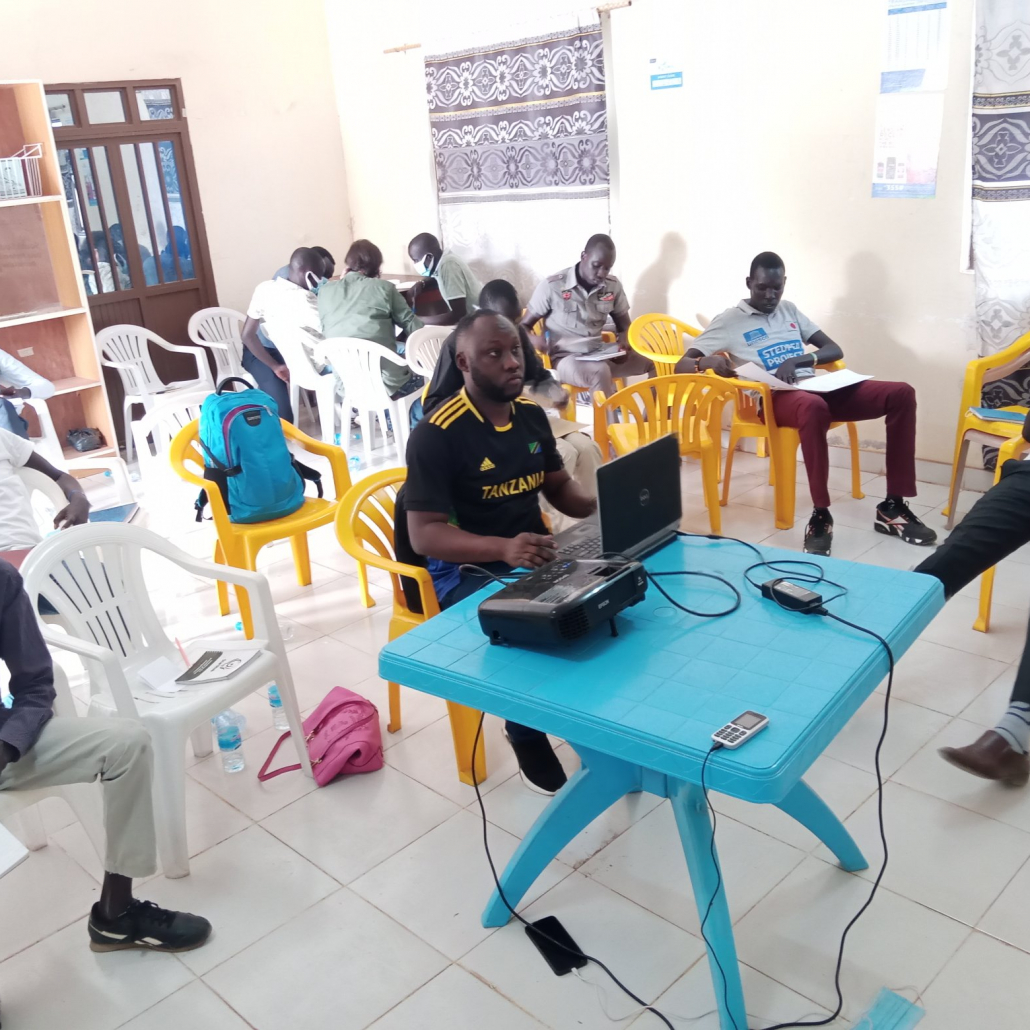
Our staff, Elisha Olukani(in black) at the South Sudan Ideathon session that took place on 26th February 2022 physically at the Koneta Hub in Juba

The following day, classes began proper. On day 1, applicants were taught how to understand the problem that they were trying to solve. For every successful company, there is a problem it solves. People were tired of paying steep prices to stay in hotels, and that is how Airbnb came up. This is true for all startups.

To identify a problem, entrepreneurs have to talk to customers. The participants were equipped with tools to interview their target groups and how to fill in the insights sheet. At the end of this day, the applicants were able to form a problem statement and also describe their target group and core problem. 

Day 2 kicked off on 28th February 2022. The participants knew the problem at hand, now it was time to discover the perfect solution for it. Desk research is not enough. It is better to spend time with the target customers and one will be able to get insights into the perfect solution for the problem. This is where the Value Proposition canvas comes in. 

The applicants were taught how to fill it in based on insights from the customers. They were provided with a template so they didn’t need to design one. They also studied the Safeboda value proposition canvas. Safeboda is one of the most successful digital innovations in East Africa. 

The final day was about making a prototype. There are various tools with which one can make a prototype including Canva, which is one of the most popular tools. The importance of a prototype is that it helps an innovator to test their innovation before putting it out in the market. 

This gives the innovator the flexibility to change their innovation as feedback comes in from the customers. It is useless to build something that customers do not want or find difficult to use. Customers want an easy and smooth user experience. Interacting with them is the best way to understand this experience. 

How to qualify for the next stage

To qualify for the next stage, innovators had to show that they have understood what they have learnt in the ideathon phase. They had to complete the following assignments. 

  • Interviews
  • Fill in the Interview insight sheet
  • Fill in the problem statement
  • Fill in the Value Proposition Canvas
  • Create a prototype and test it 
  • Fill in the feedback sheet

As a bonus, the innovators had to record a 2 min video explaining their target group, the problem they are solving, their solution and what they had done so far. They also had to verify that their solution is needed and customers will pay for it. It was also important to mention that they were the right team to accomplish this. 

The deadline of submission for these tasks was Sunday 6th March 2022 at 10 PM EAT, but it was extended up to 7th March 2022 at 7 PM EAT to cater for some innovators that faced problems with submissions.

What’s Next?

The 10 best innovators per country are going to be chosen by a combination of Program country leads and an expert panel of judges. They will then undergo the physical boot camps which will be held in each country. 

Uganda and South Sudan will be the first bootcamps kicking off on 21st to 26th March 2022 followed by Rwanda and Kenya from 28th to 2nd April and finally Tanzania and Burundi on 4th to 9th April 2022. Each boot camp will end with a pitch event and the winners will represent each country at the regional finals in May. 

About the Program 

Digital Skills for an Innovative East African Industry (dSkills@EA) is a project as part of the technical development cooperation between the EAC and Germany. Digital Innovation for Business Resilience in the EAC is a program under the dSkills@EA project.

The political partners are the East African Community Secretariat and the German Federal Ministry for Economic Cooperation and Development (BMZ). The main implementation partners are the Inter-University Council for East Africa (IUCEA) and the Deutsche Gesellschaft für Internationale Zusammenarbeit (GIZ), together with an East African-German academic consortium of universities and the German Academic Exchange Service (DAAD).

 The project has also attracted other in-country partners like UNDP Accelerator Labs and Hindsight Ventures in Tanzania, Fie Innovation Labs in Kenya, Makerere Innovation and Incubation Centre(MIIC) in Uganda, Envisage and the University of Rwanda in Rwanda and Koneta Hub and Junub Open Spaces in South Sudan. 

© Copyright 2022 StartHub Africa