Resty Mbali Is Rethinking How Communities Use Agricultural Waste
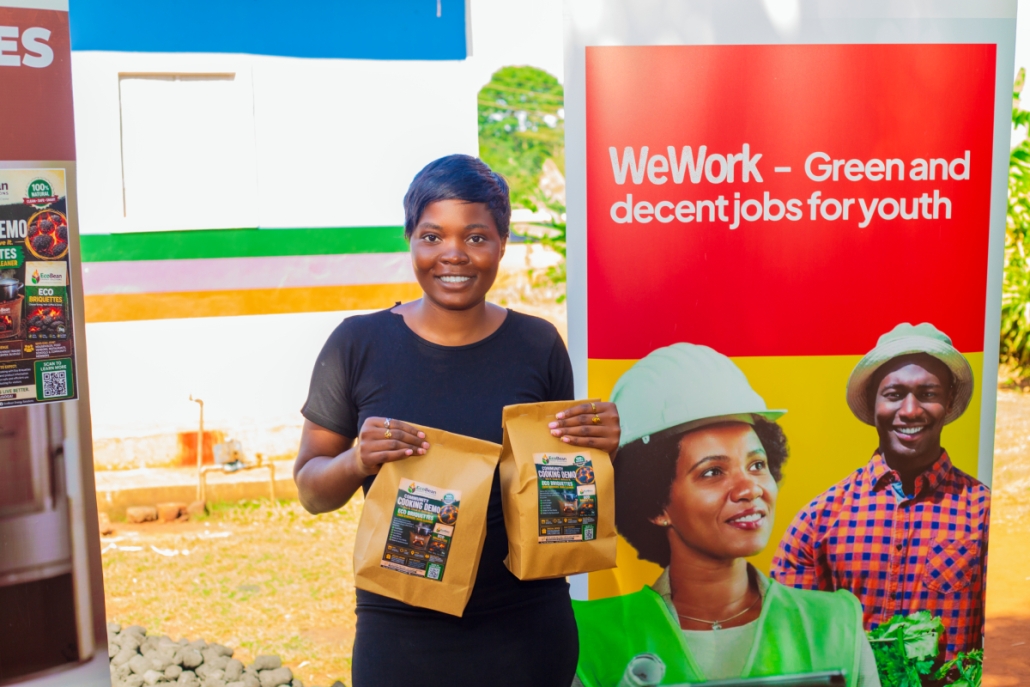
What if agricultural waste could become a solution to some of the challenges facing households and small businesses?
For Resty Mbwali, founder of EcoBean Energy Solutions, this question is at the heart of her business. Working with locally available coffee husks, she is producing alternative cooking fuel while creating income-generating opportunities for young mothers in her community.
Her business transforms underutilized coffee husks into eco-briquettes, providing an alternative to firewood and charcoal for households, restaurants and small food businesses.
The process begins with collecting coffee husks from communities and nearby coffee-processing facilities. The husks are carbonised, crushed into powder and mixed with cassava flour, which acts as a binder. The mixture is then fed into an extruder machine to produce the finished briquettes.
For communities where tree cutting, firewood scarcity and rising cooking fuel costs are growing concerns, this innovation offers a practical alternative. Resty explains that one kilogram of the briquettes can burn for approximately three to four hours, making them a longer-burning option for households and small businesses.
Moving beyond traditional production methods
Before joining the WeWork Project, Resty’s business operated on a relatively small scale. Production relied entirely on locally improvised methods, using small tins to shape the briquettes and a locally assembled metallic drum to carbonize the coffee husks.
While the business had established a product and identified a market need, limited production capacity made it difficult to meet growing customer demand.
At the time, the team produced approximately 75 kilograms of briquettes per week. They also faced gaps in business management, financial record-keeping, budgeting and identifying potential customers.
Through the WeWork Project, Resty participated in business training covering budgeting, sales planning and market identification. She also embarked on a four-month mentorship journey, working with a business coach to strengthen her product, improve her operations and build more structured business practices.
One of the most significant milestones was accessing an extruder machine, which transformed the production process. While the team still uses local methods to carbonise and crush the coffee husks, the machine has enabled them to produce more consistent, quality briquettes in larger quantities.
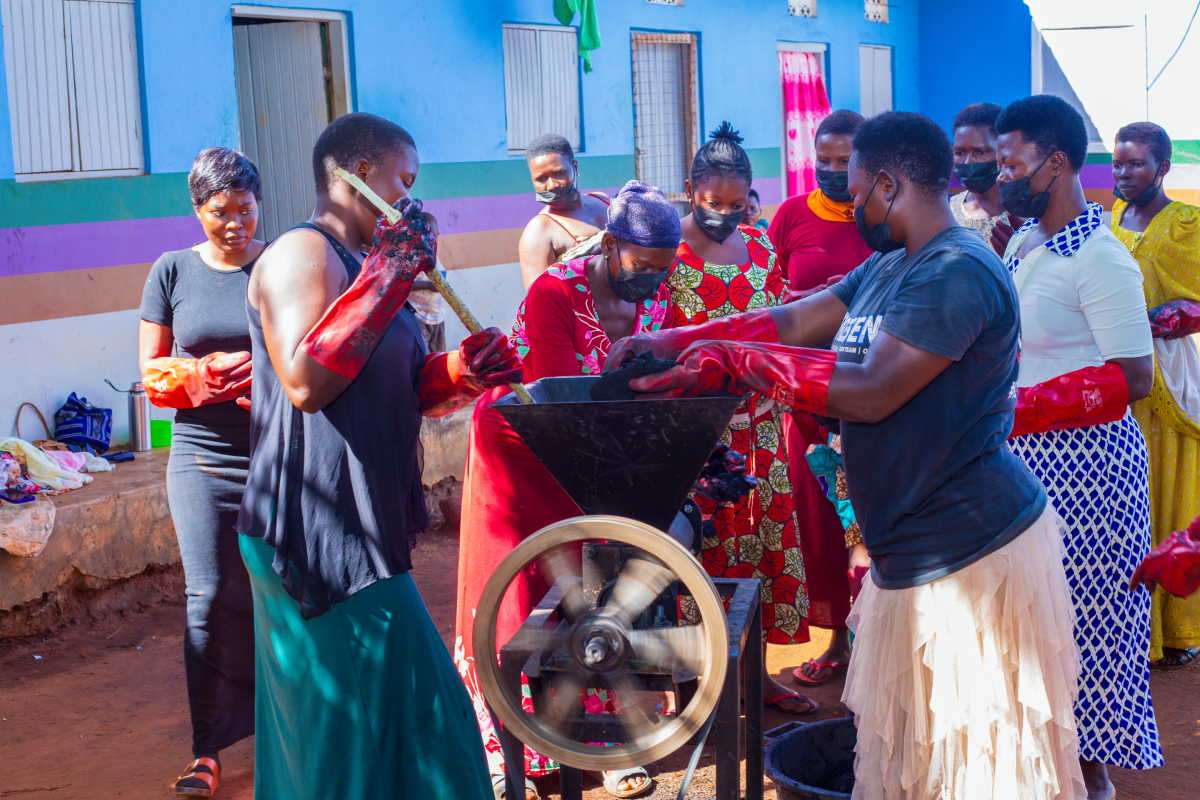
The extruder machine being used for production
“The WeWork Project has helped us increase our production capacity from 75 kilograms to approximately 446 kilograms per week. Access to the extruder machine has made our production process easier and enabled us to produce more consistent briquettes,” said Resty.
Building a stronger business beyond production
For Resty, the transformation has gone beyond acquiring equipment and increasing production.
The mentorship journey has helped her introduce more structured financial management practices, including digital record-keeping and issuing receipts to customers. The business has also improved how it plans sales, manages finances and identifies potential markets.
“Through the training and mentorship, we have improved how we manage our finances, keep records, plan our sales and identify potential markets. We are now more organised and better positioned to grow the business.”
These changes have helped the enterprise become more organised and better positioned to manage its growing customer base.
By producing against customer orders, the business is also working towards ensuring that its increased production translates into actual sales rather than unsold stock.
Creating opportunities for 15 young mothers
Perhaps one of the most meaningful outcomes of the business’s growth is the opportunities it is creating for women in the community.
Resty started with a team of three people. Today, she works with 15 young mothers from Buwenge and neighbouring villages, who contribute to different stages of the business.
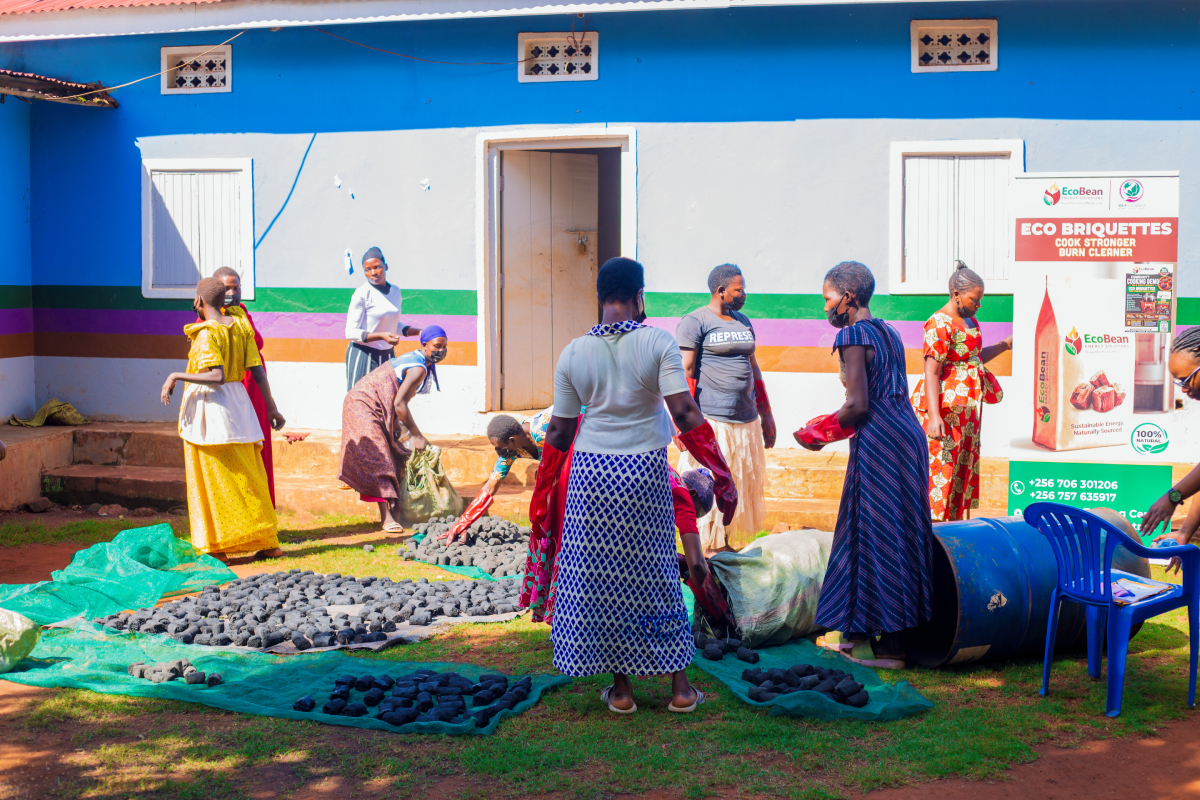
The women removing the briquettes and laying them out to dry
Some participate in briquette production, others help source coffee husks, while others are involved in marketing and taking the products to nearby markets.
Through these activities, the women earn income that helps them meet some of their household needs.
For Resty, creating employment opportunities for young people, particularly young mothers, is an important part of the business’s vision.
Her ambition is to establish distribution depots in different trading centres and expand into nearby towns, including Jinja, where the business is already attracting customers. This expansion would create further opportunities for young people to participate in the growing enterprise.
Looking beyond briquettes
Resty’s vision extends beyond producing alternative cooking fuel. She sees an opportunity to unlock more value from the coffee value chain by transforming agricultural waste into useful products.
The business is already exploring ways to utilize the remains from briquette production, with some of the by-products being taken by women in the community for use in their gardens.
Looking ahead, Resty hopes to diversify into other products, including bio-pesticides and biochar, creating additional opportunities from materials that would otherwise go to waste.
Reflecting on her journey, Resty acknowledges the role of the WeWork Project in helping the business strengthen its production, marketing and financial management practices.
From traditional production methods to increased output, improved business systems and a growing network of young women, her journey demonstrates how the right combination of mentorship, technical guidance and access to appropriate equipment can help entrepreneurs turn locally available resources into viable business opportunities.
As EcoBean Energy solutions continues to grow, Resty is working towards a bigger vision: building a business that contributes to cleaner energy alternatives, makes better use of agricultural waste and creates meaningful economic opportunities within her community.